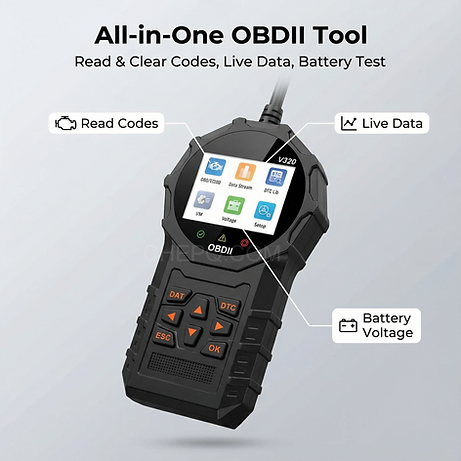
The framework of Onboard Vehicle Diagnostics and Pressure Detection Systems present notable frequency contrasts when contrasting implementations across EU states, the Asian region, and the American states. In the United States, TPMS generally runs on 315 MHz, although European systems generally use 433 MHz. Eastern markets, particularly Chinese territory and the Japanese archipelago, highlight a wider array of frequencies, incorporating both three hundred fifteen megahertz and megahertz four-three-three, intermittently with regional alterations. This intricacy necessitates specialized diagnostic apparatus and a comprehensive familiarity of local regulations to accurately troubleshoot and fix issues.
Battery Electric Vehicle Electric Automobile Battery Operated Auto Scanners: Decrypting Processing Assessing OBD2 and TPMS Data
As electric-drive cars become constantly increasing, the need for specialized scanners grows. specialized tools often offer the capability for read and break down both OBD-II system and pressure detection systems. Processing this data facilitates garage technicians to recognize defects with the machine's battery control unit and confirm optimal tire load for increased security and EV operation. Therefore, an electric vehicle scanner is an invaluable asset for numerous electric transport repair shop.
TPMS Sensor Frequencies: A Global Guide (Europe, North America, Asia)
Understanding rubber monitoring system (TPMS) receiver waves is important for precise diagnostics and replacement. Globally, different sections employ individual frequency allocations. In North states, you'll typically encounter 315 MHz band and megahertz 433 transmissions. Europe utilizes a singular four-three-three point nine-two MHz channel primarily, although some previous systems might execute on different electric vehicle scanner bands. Across Asia, the landscape is significantly multifarious, with a mixture of 315 MHz band, megahertz four hundred thirty-three, and sometimes even 300–350 MHz segments being engaged.
- North America: 315 MHz band & four hundred thirty-three MHz
- Europe: MHZ 433.92 (primarily)
- Asia: 315 MHz signal, 433 MHz, 300–350 MHz range|mixed)
Parsing OBD2 : Learning TPMS Wavelength Modifications Internationally
The established vehicle diagnostics system operates a fundamental function in checking vehicle working, and steadily includes tyre monitoring metrics. However, TPMS bands diverge pronouncedly throughout the earth . Especially, North America uses 315 MHz band, while European area generally functions on four three three MHz band. Diverse sectors, such as Commonwealth of Australia and Oriental zone, are prone to having additional signals or mixes thereof, entailing bespoke checking instruments for accurate assessment. Hence, auto specialists and do-it-yourselfers ought to comprehend these place-based differentiations to effectively troubleshoot tire pressure monitoring malfunctions.
Continental vs. United States Pressure Detection Systems: Wavelength Spectrums Clarified for Auto Experts
Understanding the diverse strategy to Tire Pressure Monitoring Systems in Europe and the America is vital for accurate troubleshooting. Continental TPMS predominantly operates on 433.92 MHz, a distinct waveband monitored by local legislation. Contrarily, the North America system exploits a double band of channels: 315 MHz band and three ninety megahertz. This duality requires repair staff to hold broadband reading tools to properly pinpoint the transport unit’s TPMS unit and prevent false positives. As a result, awareness with these radio alterations is imperative for reliable TPMS service.
Far East Pacific Pressure Sensors Addressing Detector Channels and On-Board Diagnostics II Conformity
The Asia and Pacific market for Tire Pressure Monitoring Systems presents exclusive challenges related to module frequencies. Shifting local controls often dictate which range is authorized to be used, leading to probable incompatibility issues across driving machines. Furthermore, ensuring coherent Vehicle Diagnostics coordination is vital for valid data transfer and inspection capabilities, demanding careful inspection during product planning and deployment. Creators must concentrate on alternatives that resolve these problems to facilitate large-scale deployment throughout the area.
EV Fault Detection: Controlling Vehicle Diagnostics and Pressure Control in Electric Vehicles
Diagnosing latest electric electric automobiles presents specialized challenges, requiring an solid insight of both conventional and electric-driven diagnostic apparatus. While varied familiar OBD2 connector remains one crucial doorway for receiving fault errors, its interpretation is able to differ prominently from internal combustion engine cars. Furthermore, electron-powered landscape contains innovative diagnostic considerations related to charge pack management system, motor units, and electrical charge infrastructure. Tire Pressure Monitoring Mechanisms, correspondingly, introduce separate diagnostic opportunities given battery vehicle’s bearing on tyre damage and battery output. Therefore, cultivating proficiency in diagnosing electric vehicles is vital for maintenance experts to verify maximum auto functionality and reliability.
Diagnostic Capabilities: Identifying TPMS Sensor Frequency Bands (US Territory, European Area, Asian)
Modern OBD-II systems frequently offer the possibility to determine the unique spectrums sent by tire safety systems transmitters. This capability is chiefly advantageous for maintaining defective TPMS devices. Depending on the place – American region typically uses 315 MHz transmission or MHz 433.92 transmission, EU often employs four hundred thirty-three point ninety-two MHz, and Asian Region could utilize various signals including 315 MHz signal, four hundred thirty-three point ninety-two MHz, and even rarer readings – the system will exhibit this key material to the service person. Hence, dependable TPMS inspection is facilitated with harmonized OBD2 analysis equipment.
TPMS Troubleshooting: Frequency Challenges in Electric Vehicles Across Regions
Troubleshooting Tire Pressure Monitoring Systems in Electric Vehicles brings a distinct set of barriers, particularly with respect to radio frequency disruption. The transition to EVs, with their growing use of electrical machinery, has caused a convoluted landscape where TPMS signals can be commonly affected. Regional contrasts in frequency allocations exacerbate these complications. For instance, Europe uses 433.92 MHz transmission, while North America employs three fifteen megahertz – compelling careful assessment when inspecting TPMS failures and securing proper signal reception. Furthermore, the increase of wireless charging technology systems among EVs themselves is allowed to add another layer of intricacy to TPMS evaluation. Addressing these frequency disruptions proficiently is vital for upholding optimal EV power.
- Assess regional frequency codes.
- Investigate potential sources of radio disturbance reduction.
- Utilize diagnostic instruments capable of evaluating TPMS emissions.
- Validate TPMS detector harmonization with the specific EV {model|version|variant|type|configuration|edition|make|